
The first timber high-rise in the U.S. set for construction in Portland

To some, the idea of timber high-rises is still a contentious issue, with much of the debate focused on aspects of fire safety, but that hasn’t stopped Lever Architecture from designing what will become the first timber high-rise in the United States.

Framework, a 90,000-sf, 12-story mixed-use building, recently became the first timber high-rise in the country to receive a building permit. According to Lever Architecture, the building is “ part of a mutually beneficial cycle between natural resources, the rural timber industries that rely on these resources, and the cities served by the completion of these buildings.”
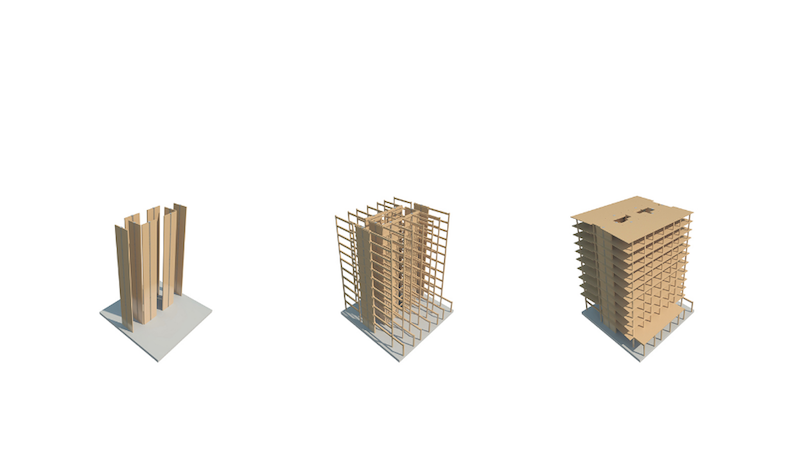
Rendering courtesy of Lever Architecture.

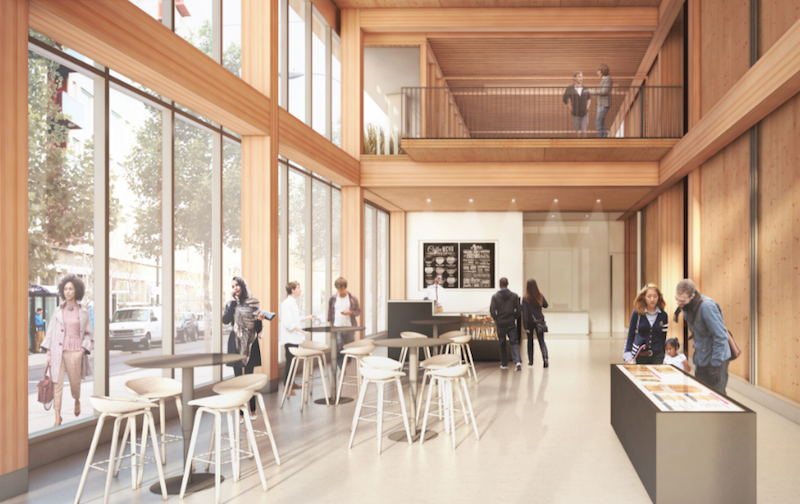
Retail and public exhibition space will be combined on the ground floor while the rest of the high-rise will comprise five levels of office space and 60-units of affordable housing. The affordable housing component will accommodate residents earning less than 60% of the Area Median Income (AMI). Meanwhile, the commercial tenants will be B corporations ­– businesses certified to meet rigorous standards of social and environmental performance, accountability, and transparency.

Framework has received a $1.4 million award from the U.S. Tall Wood Building Prize Competition that will offset the costs of testing and peer review necessary to pursue a performance-based project beyond what is permitted in current building codes.
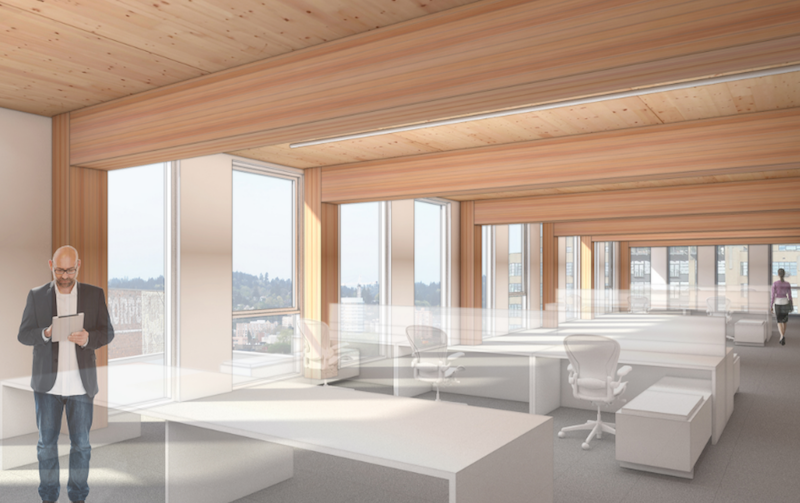
Rendering courtesy of Lever Architecture.

The project is scheduled to begin construction in late 2017 and be completed by late 2018.
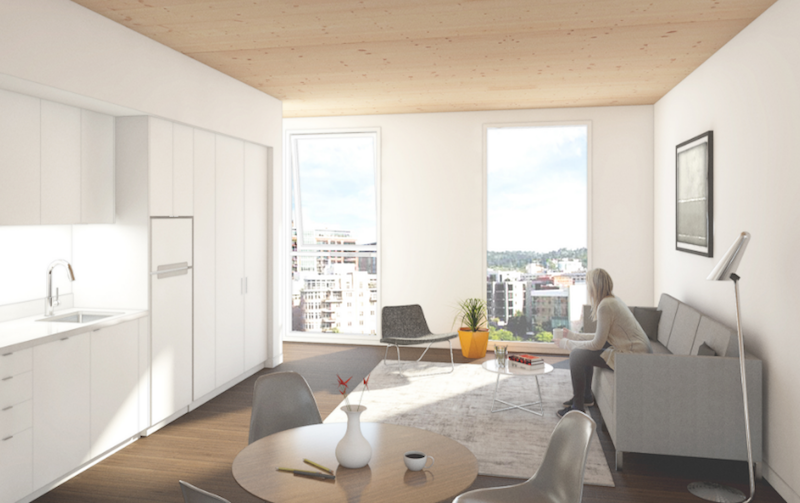
Rendering courtesy of Lever Architecture.

Rendering courtesy of Lever Architecture.
Comments

Popular posts from this blog

AAMA releases new document on aluminum fenestration and energy efficiency

The American Architectural Manufacturers Association (AAMA) recently released a new white paper that discusses the use of aluminum in high-performing building enclosures. AMC-2-26, “Aluminum in High-Performing Building Enclosures,” is now available in the AAMA online store as a complimentary download. “This white paper was needed in order to educate and inform the marketplace about the energy advantages of using aluminum fenestration,” said Elizabeth Cotton (Kawneer), chair of the AMC Marketing Committee. “With today's technology, these products can achieve current and foreseeable stringent codes requirements in an efficient and innovative manner, as well as achieving credits through green building certification programs.” The document addresses aluminum extrusions used in the manufacture of entrances, storefront framing, curtain walls, windows and skylight fenestration systems. Aluminum products can be sustainable due to the recyclability of aluminum that helps conserve energy ...

WeWork takes on a construction management app provider

WeWork, the New York-based urban workspace designer and redeveloper that’s one of the fastest-growing companies in the U.S., has acquired Fieldlens, a six-year-old producer of construction management applications that allow for more efficient on-site communications. Most construction projects “are broken social networks,” says Doug Chambers, Fieldlens’ founder. His company’s app helps make a jobsite environment more like Facebook or a social feed, where everyone on site is communicating in real time, all the time. An example Chambers gives is a project manager who is walking a site, and using the app on his smartphone to send observations, pictures, confirmations, and directives to other crew members. Chambers says that on one jobsite in Buffalo, N.Y., the Fieldlens app is facilitating 1,000 interactions per day, on average, among the 80 to 100 workers on site. “Fieldlens lets people get back to work,” and not get bogged down on a lot of administrative and paperwork duties, says Cha...

ABC's Construction Backlog Indicator rebounds in 2017

Associated Builders and Contractors (ABC) recently reported that its Construction Backlog Indicator (CBI) rose to 9 months during the first quarter of 2017, up 8.1 percent from the fourth quarter of 2016.  CBI is up by 0.4 months, or 4 percent, on a year-over-year basis. “This was a terrific report,” said ABC Chief Economist Anirban Basu. “For the first time in the series’ history, every category—firm size, industry and region—registered quarterly growth in CBI. Among the big winners were firms in the western United States and those with annual revenues between $30 million and $50 million per annum" Highlights by Region Surging financial markets helped support activity in financial centers like New York, Philadelphia and Boston. Expanding cyber-security and life sciences activity supported markets as geographically diverse as Washington/Baltimore; Austin, Texas; Silicon Valley, Calif., and Seattle.  Though backlog is slightly lower in the South on a year-over-year basis, ...